
Blog
How to Incorporate Colour in Your Engagement Ring Design
From colourful statements, to subtle accents, coloured gemstones are a beautiful way of making an engagement ring unique and meaningful. Here are 5 ways to incorporate colour in your design.
Coloured gemstones are a beautiful way to make your engagement ring entirely unique. While you might be sure that you want some colour in your engagement ring, it can be trickier to decide exactly how you want to incorporate coloured gems into your design.
We’ve got you covered.
From colourful statements, to subtle accents of colour, here are 5 ideas for how to include colour in your engagement ring design.
1. Solitaire coloured gemstone engagement rings
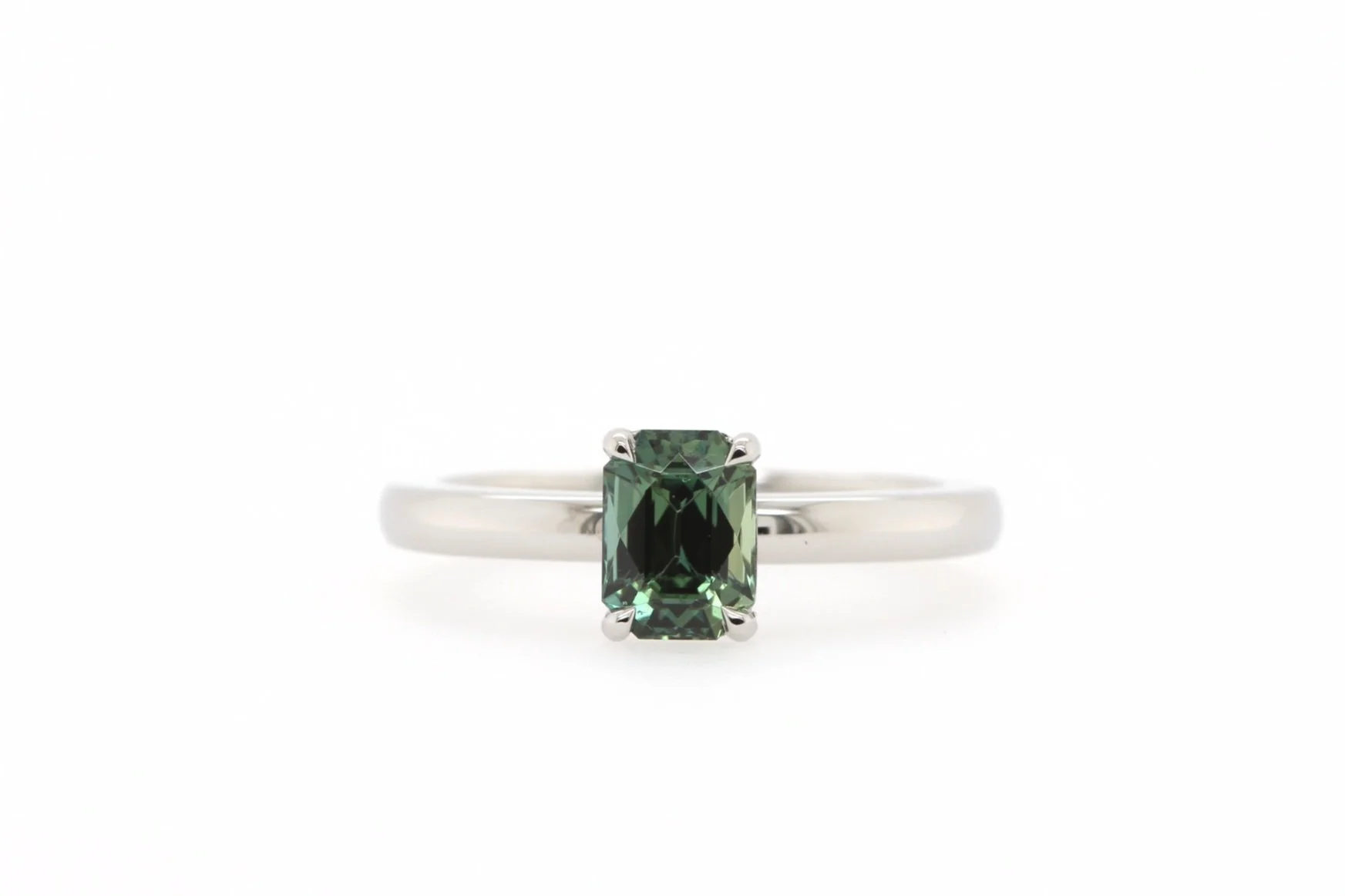
Coloured gemstones are a beautiful statement all on their own, in a ‘solitaire’ engagement ring design. Whatever its size, a single coloured gemstone makes for a personal, unique, and practical engagement ring. Solitaire engagement rings can feature coloured gemstones in claw settings, bezel settings, wraparound designs, or inset into a band.


2. Coloured gemstone engagement rings with diamond accents
Coloured gemstones pair beautifully with diamonds of all shapes, sizes and styles. Surround a centre coloured gemstone with a halo, include diamonds in the band, or choose matching side stones for a modern trilogy engagement ring design. All these options work beautifully alongside a personal coloured gemstone, keeping the colour the focus of the design.


3. Engagement rings with coloured gemstone accents
If you love the idea of colour, but want a white diamond as the main feature of your engagement ring, coloured gemstones can be incorporated as a secondary feature of the design. Use them as accent stones in your band, halo, or side stones for a diamond engagement ring that’s uniquely yours.


4. Engagement rings with multiple coloured gemstones
You can steer away from white diamonds entirely, and incorporate multiple different coloured gemstones into an engagement ring design. Whether you’re looking to represent multiple meanings, or have multiple favourite colours to include, you can create a ring that uses multiple colours in a way that’s both beautiful and unique.


5. Engagement rings with hidden coloured gemstones
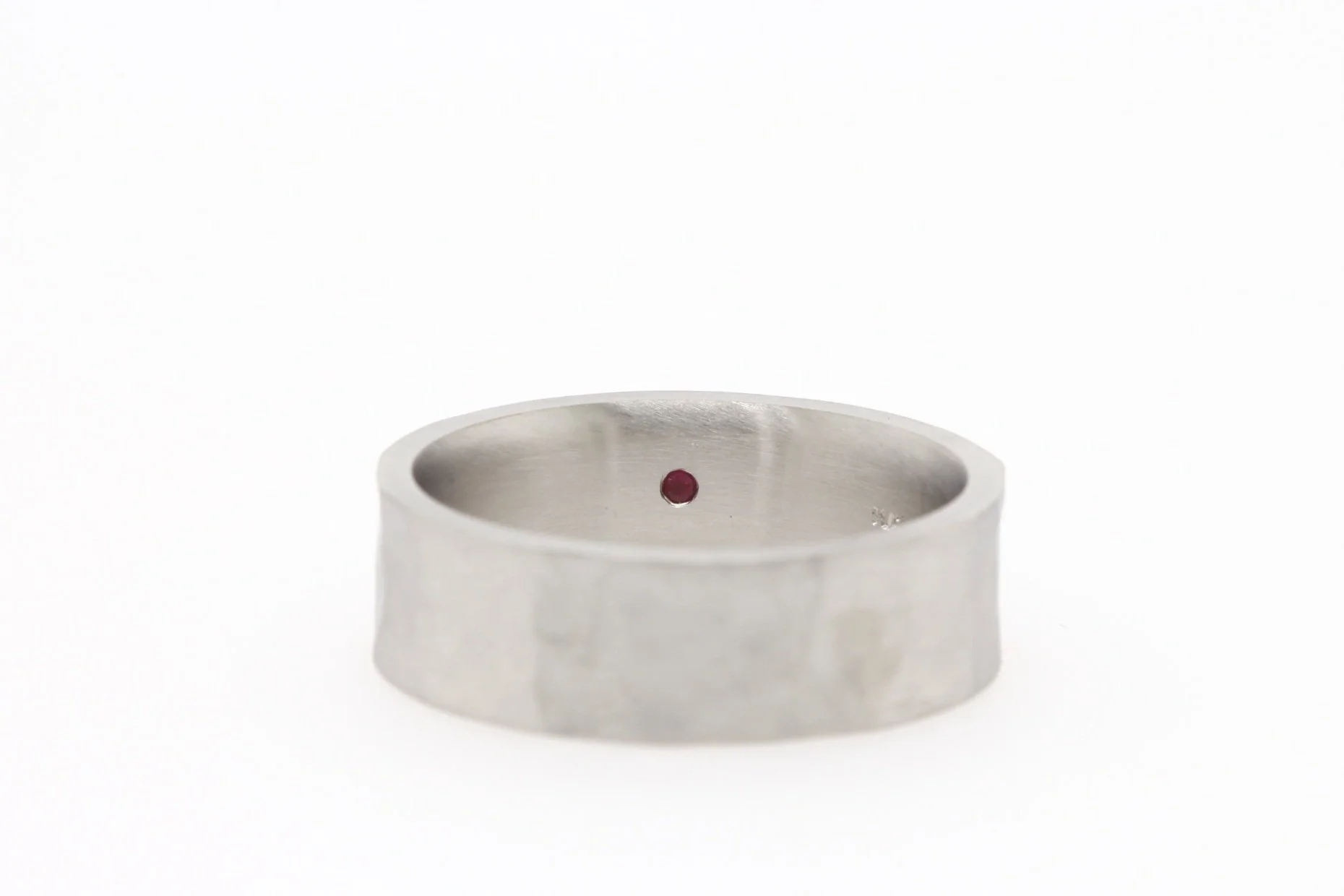
For a more subtle way of incorporating colour into an engagement ring, you can consider setting a hidden coloured gemstone into your engagement ring design. Whether embedded inside a band, or below a setting, it’s a beautiful way to incorporate a sentimental meaning that only you and your partner know about.

These 5 ideas are just the beginning of what you can design for your unique coloured gemstone engagement ring. Book a time to meet with me, to begin designing your very own design with colour.
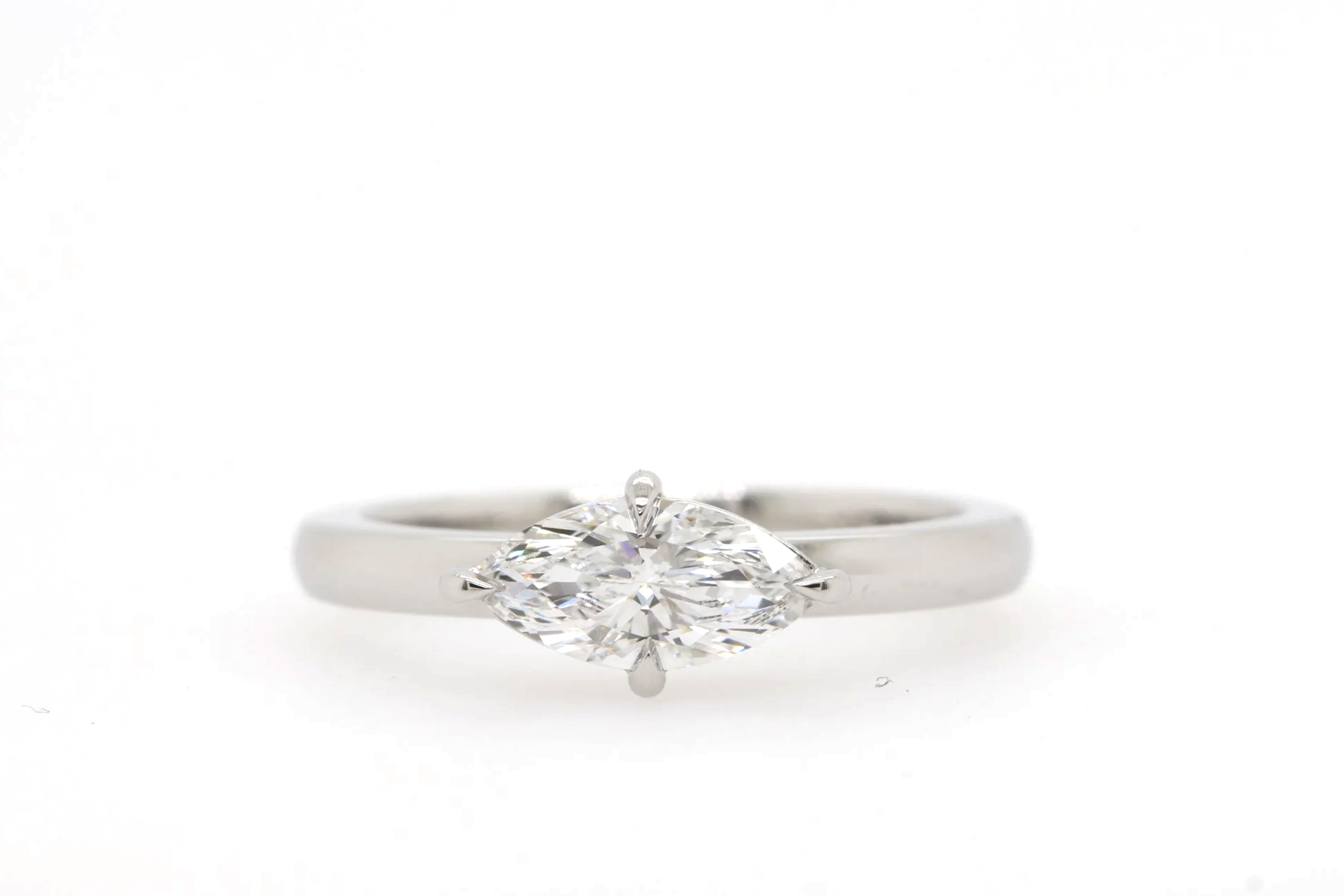


Engagement Rings Without Claws
Engagement rings are often made with claw settings (or prong settings) holding diamonds and gemstones, though this isn’t the only way of setting gems in a ring. If claws aren’t for you, here are 4 engagement ring styles without claws to inspire your design.
Claw style settings are the most common style of setting gems for engagement rings. However, claws settings aren’t for everyone, for a range of reasons. Some people simply don’t like claw settings. Others have an active lifestyle or hands-on work environment (such as a nurse or doctor) that makes a ring with claws impractical.
If this is you, here are 4 clawless engagement ring styles to inspire your design.
1. Bezel Set Engagement Rings
A bezel setting completely surrounds a gem to hold it in place. The metal of the setting encircles the gem right around, up over its girdle (or edge) creating a secure case for it. Bezels create a sleek, modern look to an engagement ring design.
Bezel settings are great for people who need a secure, claw free setting for practical reasons in their day to day life. A single round gemstone in a solitaire bezel set design is the ultimate in practicality. These settings can also be used in engagement ring designs that include multiple gemstones, for a more creative design that’s also practical to wear.


2. Half Bezel Engagement Rings
A half bezel setting (or semi bezel setting) partially encloses a gemstone, leaving some of the girdle (or edge) open. Half bezels can be used as a direct swap for claw settings in traditional design profiles, or they can be incorporated into curved wraparound bands for more unique engagement ring designs.


3. Inset Engagement Rings
For a style where the gems and the band are flush with each other, engagement rings with inset gemstones work beautifully with all precious metal and gemstone colours. This style of clawless engagement ring is best with gemstones in smaller sizes so that the band thickness can accommodate the depth of the gemstone (for larger gems, a bezel set design is a better design option).
Inset rings are delightfully practical to wear, with no raised settings in the piece. This style of clawless engagement ring is one you’ll enjoy wearing day in and day out for many years.


4. Illusion Set Engagement Rings
While technically a claw setting, an illusion setting wears more like a clawless design. An illusion setting surrounds a centre diamond with a patterned ring of metal. Beautiful bright cut patterns in the setting add dimension and interest in the piece.
Illusion settings are reminiscent of vintage engagement ring styles, with an elegant old world feel about them. They’re also excellent at making small diamonds appear larger than they really are, which makes them an appealing choice when incorporating small heirloom diamonds into a new engagement ring piece.


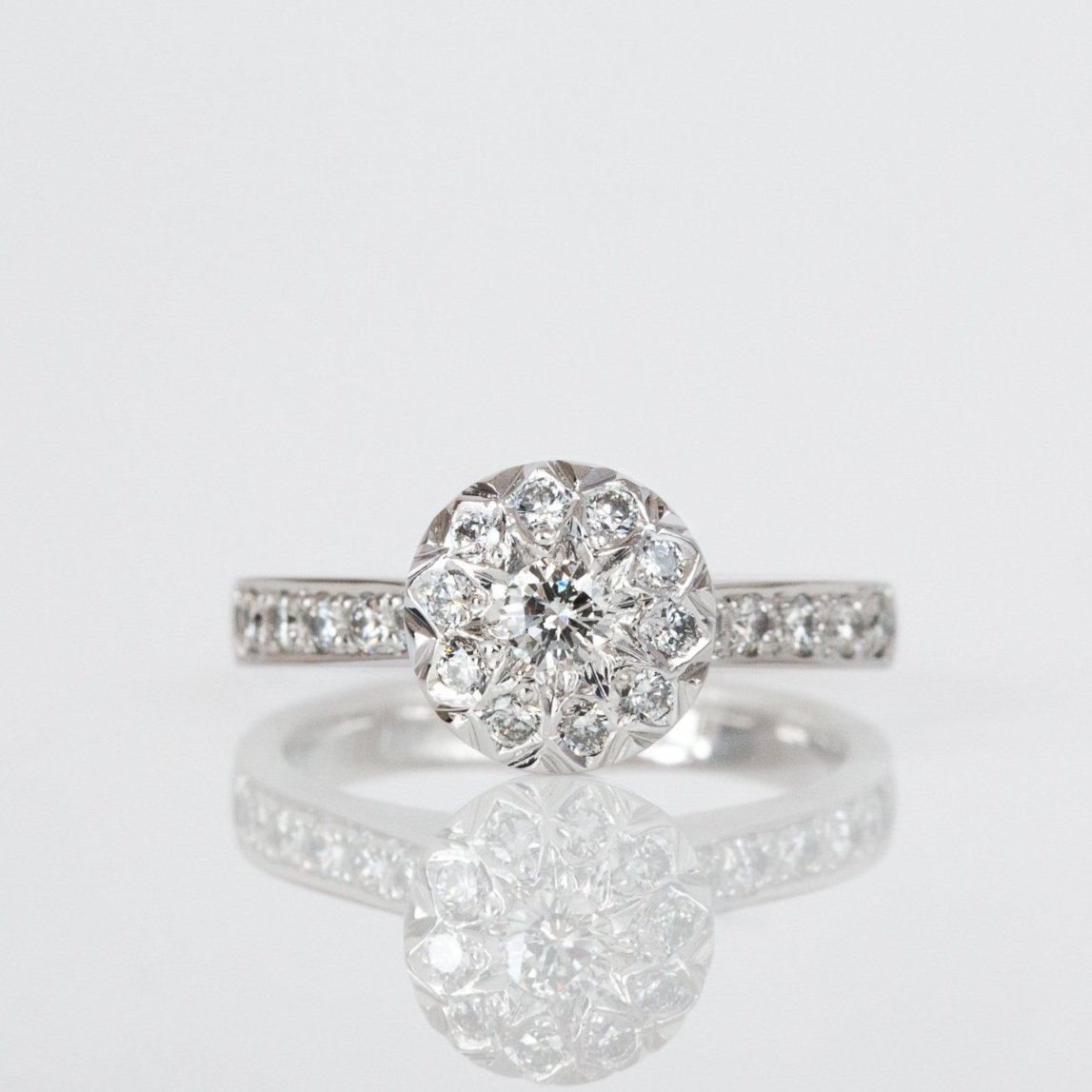
Design Your Own Engagement Ring Without Claws
These four beautiful gemstone setting styles can be used to create a custom engagement ring without using claws. If you’re ready to design your own clawless ring, meet directly with our jeweller maker in Canberra or online to get all the advice you need.
You may also like:


Why Sapphire Engagement Rings Are A Popular Diamond Alternative in Australia
Looking for a coloured gemstone to include in your engagement ring? Sapphires are a popular diamond alternative for engagement rings in Australia for good reason. Explore why here.
While diamonds are often the default option for engagement rings, there’s one other gemstone variety that’s a strong favourite for engagement rings in Australia: Sapphire. This incredible coloured gemstone variety is an increasingly sought after option for engagement rings, particularly for couples looking for a locally sourced Australian gemstone.
Here’s why.
1. Sapphires are one of the strongest coloured gemstones.
For a ring you’re going to wear on your hand every day, you want a gemstone that’s strong. Diamond is the strongest of all gemstones, and it’s this strength factor (rather than any rarity factor) that makes diamond the most popular gemstone option for engagement rings.
While no other gemstone is quite as strong as a diamond, there are other gemstones that are still strong enough to use in an engagement ring. So, diamonds aren’t the only strong option. Sapphires are one of the strongest coloured gemstones around, and they typically hold up very well in an engagement ring.
The infamous Sapphire is one of the few coloured gemstones that are strong enough for engagement rings.
2. Sapphires are found in a huge range of colours.
While sapphire is strongly associated with the colour blue, this gemstone variety isn’t exclusively blue. Fancy sapphires are available in many more colours than the traditional deep blue we’re all familiar with. The world’s sapphires includes colours from pale pastels through to bold colours in every shade you can imagine (except red, because a red gemstone with sapphire’s chemical makeup is classed as a ruby). There are even that display different colours in different lights as you go about your day, known as colour shift sapphires, or colour change sapphires.
If there’s a colour you love, chances are you’ll be able to find a sapphire in that shade. Locally in Australia, sapphires for engagement rings can be found in blues, greens, yellows, teals. Australia is particularly famous for gemstones that display multiple zones of these colours, known as parti sapphires. Other sought after favourites around the world include the peachy pink Padparadscha Sapphire, and the pastel ocean-like colours of Montana Sapphires.

Sapphires can be many colours other than the familiar Blue Sapphire, including peachy pink shades of the rare Padparadscha Sapphire.
3. Each Sapphire is wonderfully unique.
If you’re looking for a ring that’s unique, a coloured gemstone like sapphire is a wonderful way to know that no one has a ring exactly like yours. Natural sapphires have subtle variations in the colour, colour distribution, and patterning that gives each individual gemstone its own unique character. This uniqueness goes even further when you add your choice of shape and faceting style.
It’s a true joy making each and every sapphire engagement ring we create here at Harlequin Jewellers, and seeing how the uniqueness of the gemstone creates a personalised engagement ring for every client.

Colour variations in Natural Sapphire, especially Australian Parti Sapphires, make each gemstone wonderfully unique.
4. Sapphires are one of the few Australian gemstones suitable for an engagement ring.
If you’re looking to support Australia’s local industries instead of choosing an engagement ring with a gemstone from overseas, an Australian sapphire engagement ring is a wonderful way to achieve that. Australian sapphires are one of the few gemstone varieties found in our beautiful country that are strong enough for an engagement ring. We’re so lucky that the colours of Australian sapphires are breathtaking as well.
Choosing a local Australian jeweller to create the piece for you goes even further to support our local industries, and you’ll start your next life chapter with a unique, beautifully made piece to celebrate it.

Australian Sapphires are exceptionally beautiful, unique, and one of the few local gemstone options strong enough to consider including in an engagement ring.
Design your own sapphire engagement ring with an Australian jeweller
To bring your on unique Australian sapphire engagement ring to life, book an appointment directly with our jewellery maker, to explore some incredible gems, and get all the advice you need to create a practical and beautiful design.
You may also like:
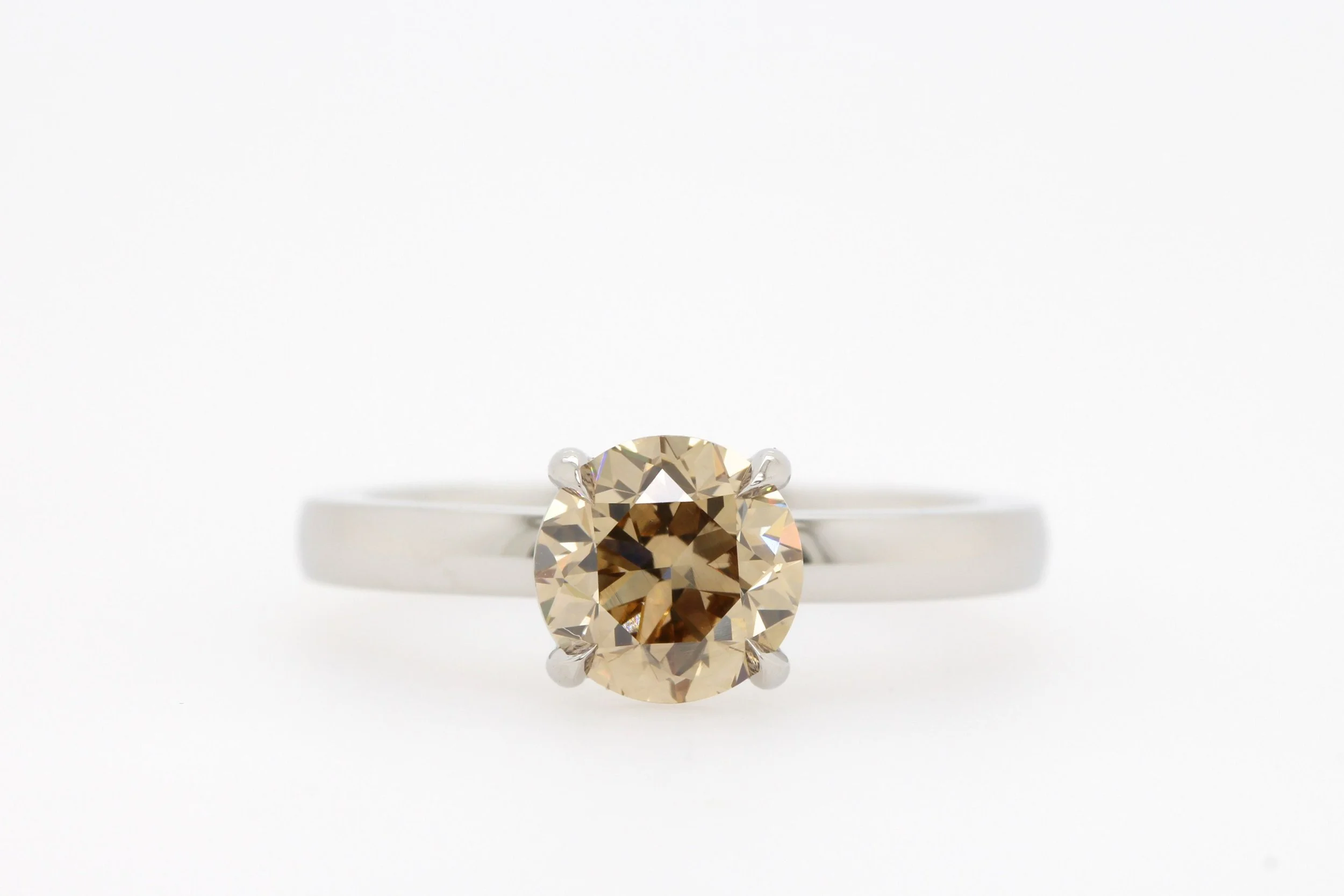


Is there such thing as coloured lab grown diamonds?
Lab grown diamonds have soared in popularity for engagement rings in recent years. Though the attention so far has been entirely on white coloured diamonds. Can lab grown diamonds be found in other colours too? Find out here.
However you feel about lab grown diamonds, there’s no denying that they’ve been the biggest newcomer to the engagement ring scene this century. Lab grown white diamonds for jewellery have gone from unheard of, to being a very common gemstone used for engagement rings, in less than a decade. In this scheme of jewellery’s evolution, that is an incredible pace of change.
All the attention, so far, has been on lab grown diamonds that are white in colour.
Natural diamonds can be found in all sorts of colours, though, not just white. In fact some of the most valuable diamonds around are in vivid shades of pink, red, and blue. Bright yellows are also a popular choice for statement coloured diamond engagement rings.
So if manufacturers can create white lab grown diamonds, can they create coloured lab grown diamonds too?
To answer this, let’s take a step back to how lab grown diamonds emerged.
When did lab grown white diamonds emerge in Australia?
While lab grown diamonds became a growing choice for Australians’ engagement rings in the 2020s, the technology to manufacture diamonds has actually been around a lot longer than that. Manufacturers have been creating diamond material in laboratories for decades, with the earliest lab grown diamonds seen as early as the 1950s.
In these early decades, it was possible to create diamond material, but not of the quality needed for use as gemstones. So the diamonds they made from the 1950s methods were used for industrial applications, like creating machining and cutting tools - which strong diamond material is perfect for.
Gem quality lab grown diamonds followed a few decades later, but it has only been from the 2020s that a ‘breakthrough’ allowed fine quality white lab grown diamonds to be produced in a way that was properly feasible for the jewellery industry. Lab grown diamonds are beautiful in colour just like natural bright white diamonds, with the same physical and optical properties of their natural counterparts.

A lab grown radiant cut pink diamond.
When did lab grown coloured diamonds emerge in Australia?
While white lab grown diamonds were becoming mainstream, the technology took a few more years to advance before manufacturers could produce coloured diamonds suitable for jewellery.
In nature, colour in diamonds results from a range of different factors - like changes in the diamond’s atomic structure when it forms (which can create pink and red), to chemical impurities in the material (which can create yellow and blue), to natural irradiation processes in the Earth’s surface (which can create green). These complex processes that produce the uniqueness of gem quality coloured diamonds, took a little while longer to be properly replicated in a laboratory.
Initially, colours were nice but didn’t quite measure up to the ‘essence’ produced by nature. However, colours are improving more and more as years go by, with many laboratory grown diamonds now rivalling the colours and beauty of natural diamonds, especially in diamonds of smaller sizes. As of 2025, both natural coloured diamonds and lab grown coloured diamonds are beautiful choices for an engagement ring.
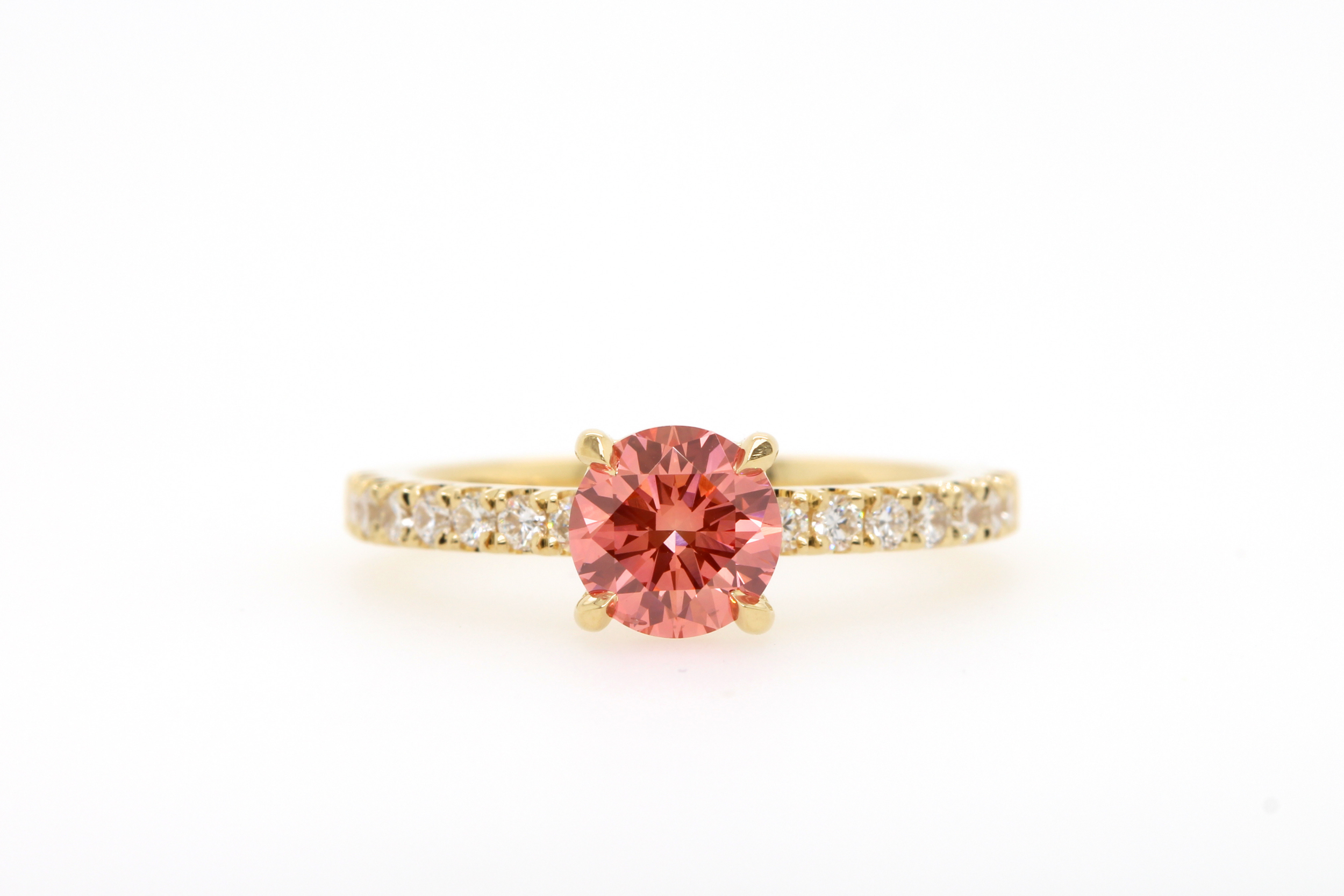

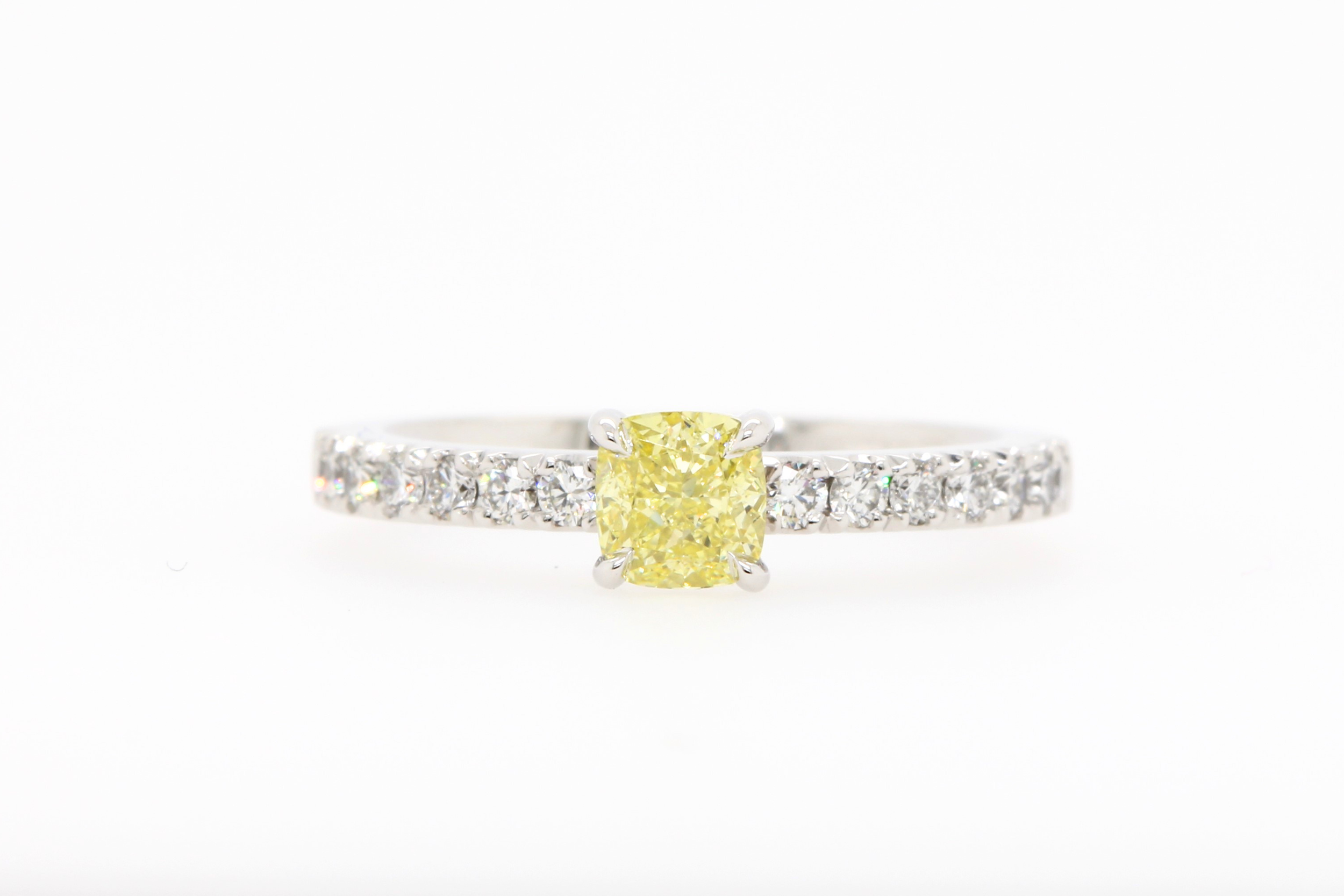

Looking for advice on selecting an excellent lab grown coloured diamond?
Book an appointment directly with a jewellery designer and maker (not a salesperson) to get personalised advice on lab grown coloured diamonds for a custom made engagement ring.
You may also like: