
Blog
Why are Solitaire Engagement Rings Popular in Australia?
A solitaire engagement ring, or a ring with one single gemstone, is a popular engagement ring style for Australian couples. Find out why here.
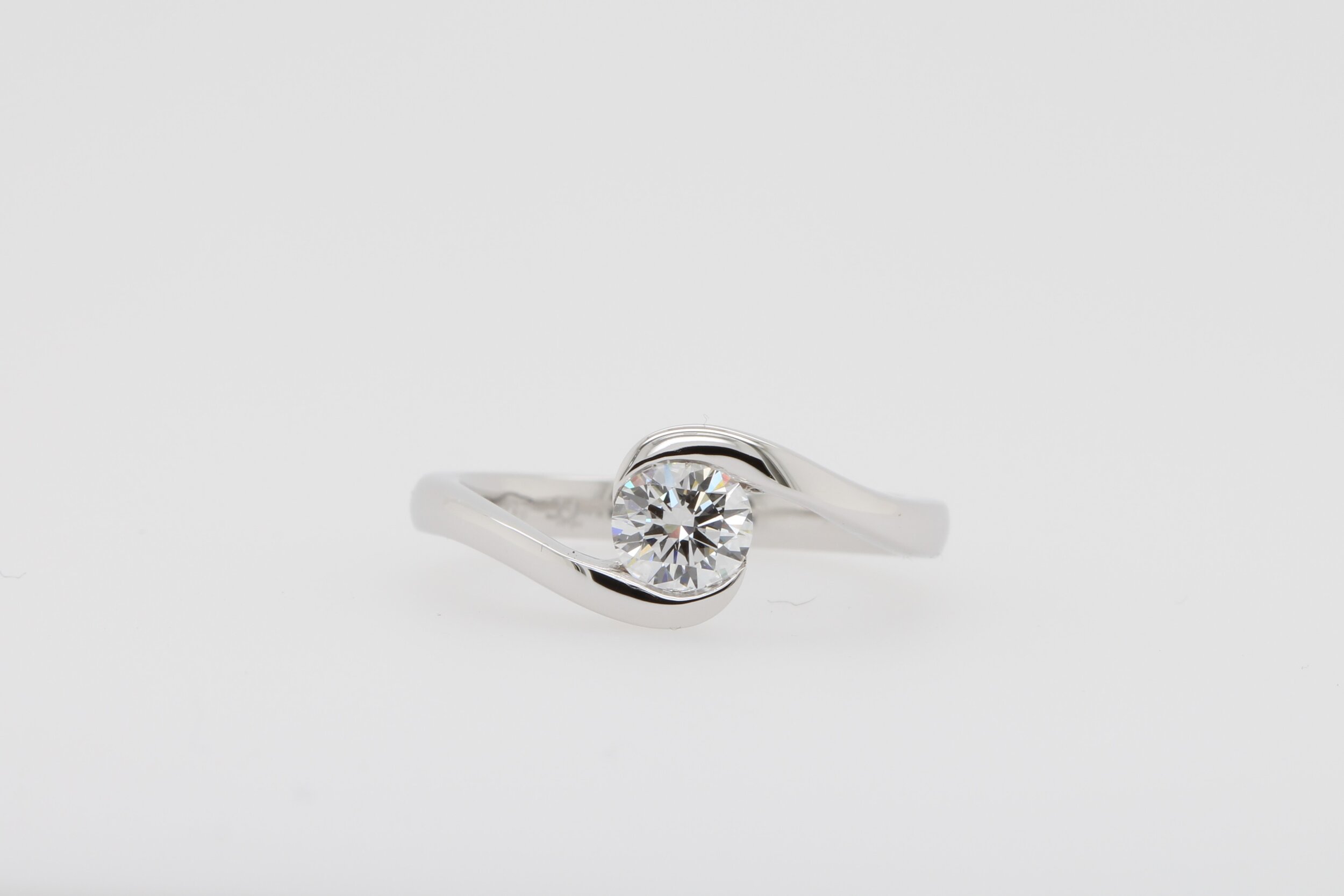
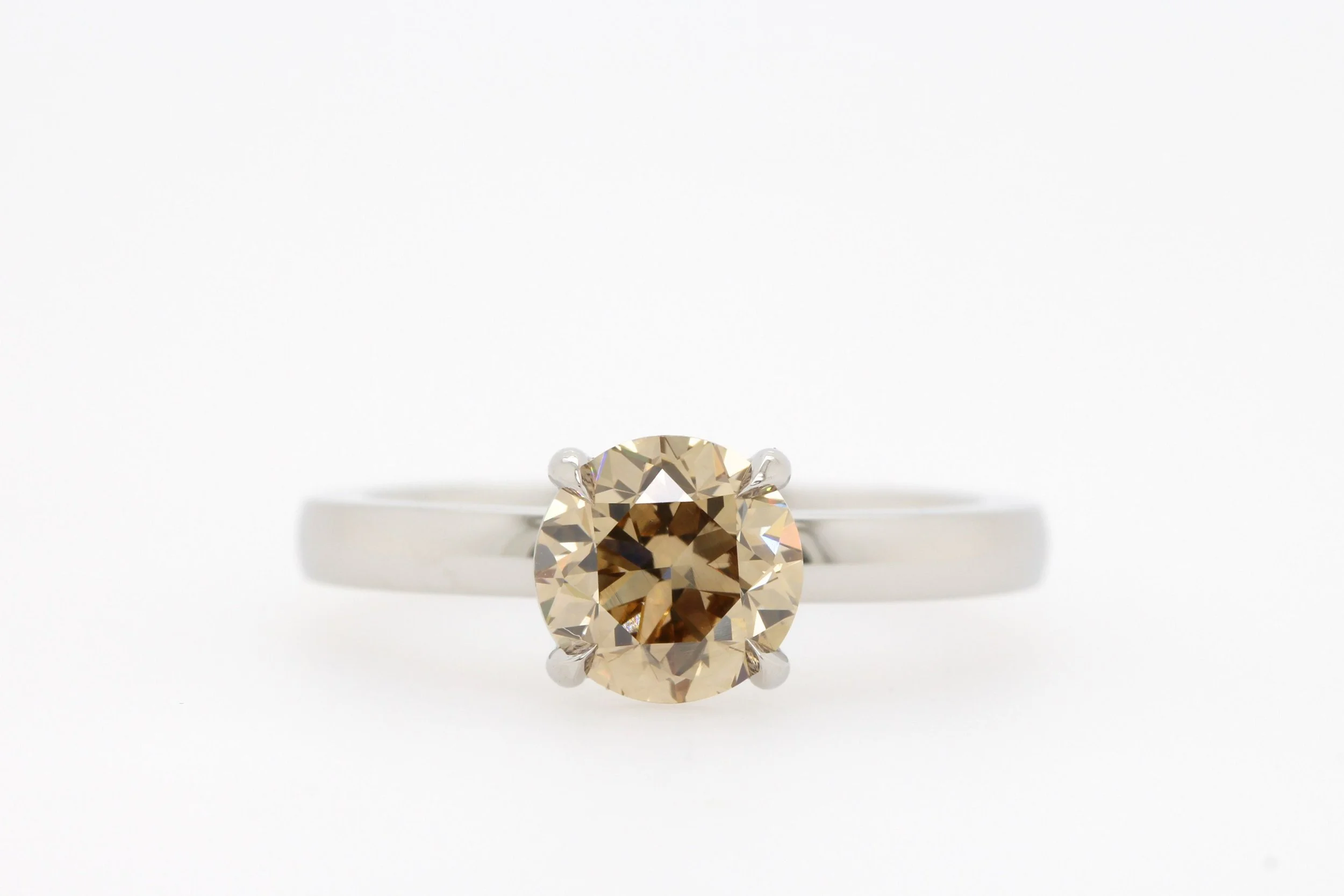
A solitaire engagement ring is a ring style with one single gemstone, and is a popular and versatile style of engagement ring worldwide. Solitaire engagement rings most commonly feature a round brilliant cut diamond in a classic 6-claw setting, though they can also feature any coloured gemstone in any style of setting.
What makes solitaire rings a popular choice for engagement rings in Australia?

1. Solitaire engagement rings are timeless.
Like anything wearable in life, jewellery trends come and go. Diamond shapes, setting styles and design features all go through phases over time. For a piece like an engagement ring that will be part of your life for a long period of time, you may want a design you’ll love for many years, long after trends of today have passed. Solitaire engagement rings are a beautiful, elegant and timeless style for this purpose. Though there’s still plenty of scope to personalise your design to make it uniquely your own.
2. Solitaire engagement rings allow flexibility with your wedding ring design.
The simplicity of a solitaire engagement ring style gives you incredible flexibility when designing your wedding and eternity rings. Whether you’re hoping for a plain gold band, a sparkly diamond band, an intricately shaped piece, or a statement coloured wedding ring, a solitaire engagement ring matches well with them all.
3. Solitaire engagement rings are a safe choice for surprise proposals.
It’s no surprise that the versatile solitaire engagement ring is a popular choice for surprise proposals, particularly for buyers who are nervous about their partner’s style preferences. A solitaire style also allows you to maximise the size and quality of the diamond in a surprise engagement ring, given the simplicity of the design. Its flattering on any finger, and can be worn alongside other pieces of jewellery, no matter their style.
4. Solitaire engagement rings can be customised to your style.
While a solitaire engagement ring has only one gemstone, there are so many ways to personalise your ring to your own style. Solitaire engagement ring designs can use diamonds or coloured gemstones of any shape to create a unique engagement ring that best suits you. Find some inspiration in the solitaire ring gallery below, or explore solitaire setting styles.


Frequently Asked Questions about Solitaire Engagement Rings
-
A solitaire engagement ring is any ring that has one single gemstone. A round brilliant cut in a 6 claw setting is the most common style, though a solitaire engagement ring can have any gemstone, of any shape, in any setting style.
-
Yes, very! Many Australian couples choose a solitaire ring for their engagement ring. A round diamond in a 6 claw setting is the most popular solitaire engagement ring style, though a solitaire can also be made unique with different gemstones, gemstone shapes, and setting styles.
-
Working directly with a jeweller (instead of a salesperson or online ring builder) can help take the overwhelm out of selecting your perfect engagement ring online. An experienced jeweller can provide expert advice to help you decide what option best suits your style and budget. You can book an appointment directly with an Australian jeweller here.
-
Choosing the perfect diamond for a solitaire setting depends on the specific diamond shape you’re looking for. Various diamond cuts also require specific setting styles to make them secure. Book an appointment with an Australian jewellery maker for expert advice on your diamond selection.
You may also like:


Engagement Rings Without Claws
Engagement rings are often made with claw settings (or prong settings) holding diamonds and gemstones, though this isn’t the only way of setting gems in a ring. If claws aren’t for you, here are 4 engagement ring styles without claws to inspire your design.
Claw style settings are the most common style of setting gems for engagement rings. However, claws settings aren’t for everyone, for a range of reasons. Some people simply don’t like claw settings. Others have an active lifestyle or hands-on work environment (such as a nurse or doctor) that makes a ring with claws impractical.
If this is you, here are 4 clawless engagement ring styles to inspire your design.
1. Bezel Set Engagement Rings
A bezel setting completely surrounds a gem to hold it in place. The metal of the setting encircles the gem right around, up over its girdle (or edge) creating a secure case for it. Bezels create a sleek, modern look to an engagement ring design.
Bezel settings are great for people who need a secure, claw free setting for practical reasons in their day to day life. A single round gemstone in a solitaire bezel set design is the ultimate in practicality. These settings can also be used in engagement ring designs that include multiple gemstones, for a more creative design that’s also practical to wear.


2. Half Bezel Engagement Rings
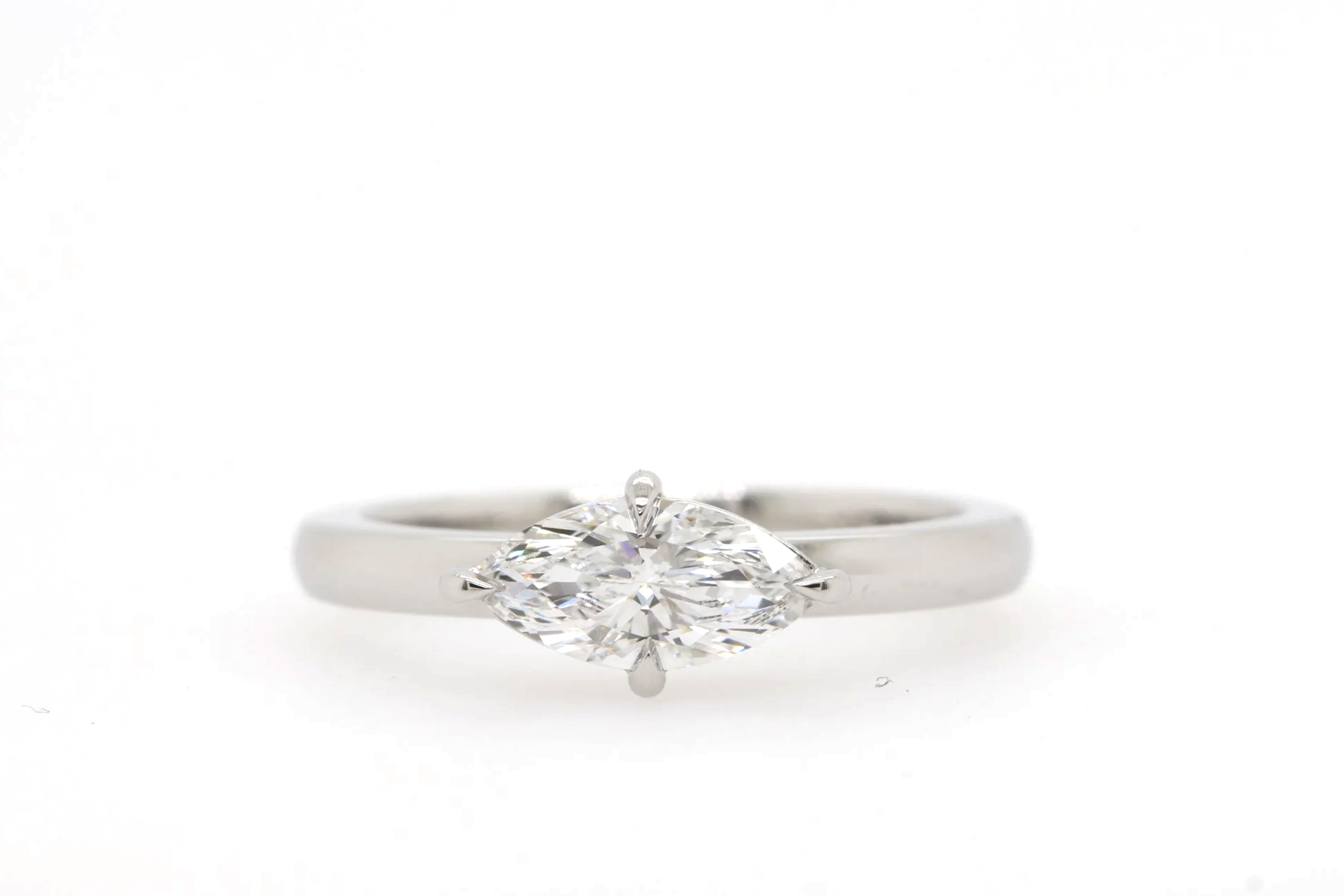
A half bezel setting (or semi bezel setting) partially encloses a gemstone, leaving some of the girdle (or edge) open. Half bezels can be used as a direct swap for claw settings in traditional design profiles, or they can be incorporated into curved wraparound bands for more unique engagement ring designs.


3. Inset Engagement Rings
For a style where the gems and the band are flush with each other, engagement rings with inset gemstones work beautifully with all precious metal and gemstone colours. This style of clawless engagement ring is best with gemstones in smaller sizes so that the band thickness can accommodate the depth of the gemstone (for larger gems, a bezel set design is a better design option).
Inset rings are delightfully practical to wear, with no raised settings in the piece. This style of clawless engagement ring is one you’ll enjoy wearing day in and day out for many years.


4. Illusion Set Engagement Rings
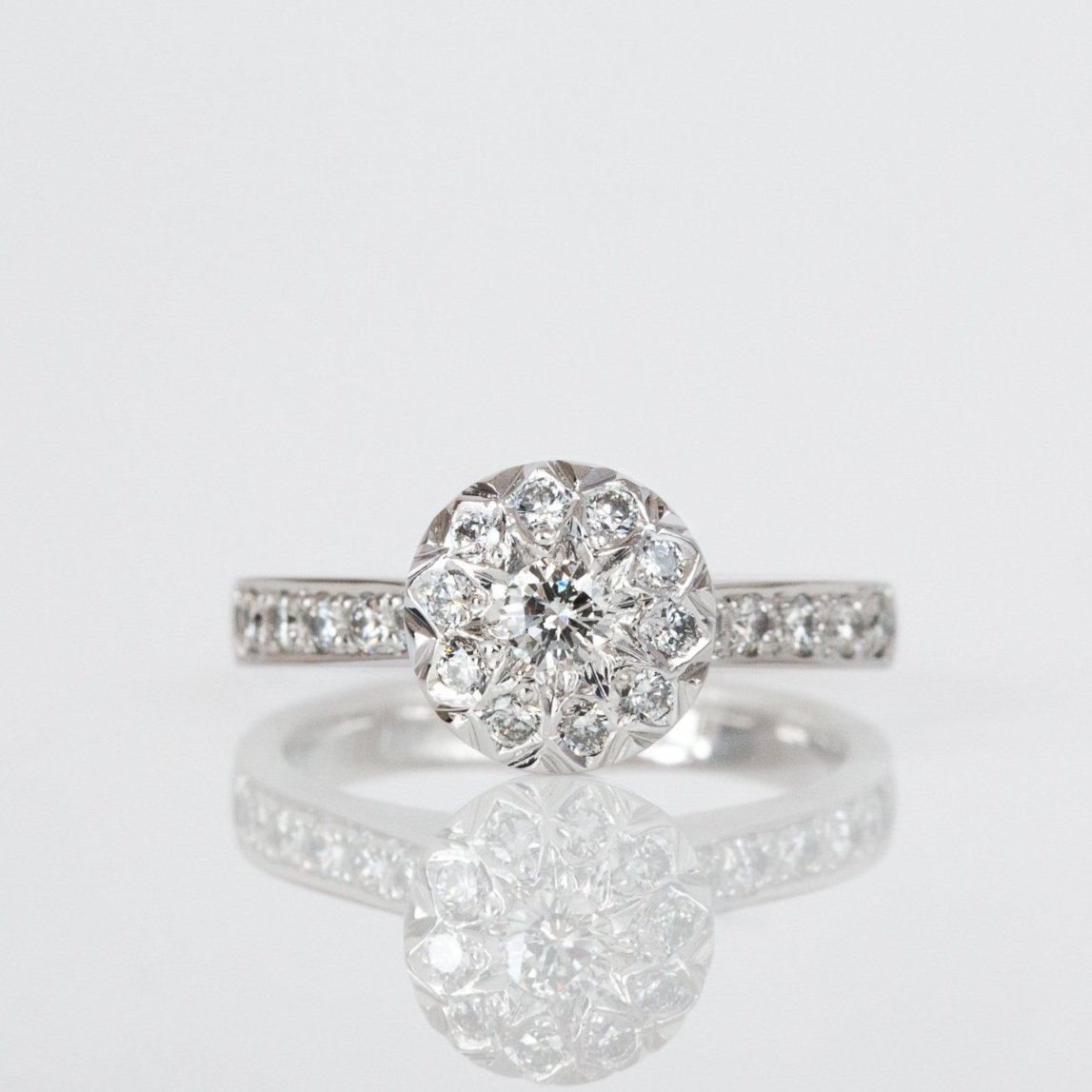
While technically a claw setting, an illusion setting wears more like a clawless design. An illusion setting surrounds a centre diamond with a patterned ring of metal. Beautiful bright cut patterns in the setting add dimension and interest in the piece.
Illusion settings are reminiscent of vintage engagement ring styles, with an elegant old world feel about them. They’re also excellent at making small diamonds appear larger than they really are, which makes them an appealing choice when incorporating small heirloom diamonds into a new engagement ring piece.


Design Your Own Engagement Ring Without Claws
These four beautiful gemstone setting styles can be used to create a custom engagement ring without using claws. If you’re ready to design your own clawless ring, meet directly with our jeweller maker in Canberra or online to get all the advice you need.
You may also like:


4 Solitaire Engagement Ring Styles
Solitaire diamond rings are a timeless and versatile choice for engagement rings. Here are 4 different solitaire designs with a round brilliant cut diamond.
Solitaire diamond rings are a timeless and versatile choice for engagement rings, particularly when made with a round brilliant cut diamond. They’re perfect for those who don’t ordinarily wear a lot of jewellery, as well as those who have a large jewellery collection because they’ll match seamlessly with any style, every day.
There are many solitaire styles you can opt for when designing your own engagement ring. Here are 4 solitaire designs with a round brilliant cut diamond to inspire your ring design.
1. Classic 6-claw Solitaire Engagement Rings
Classic designs are classics for very good reason. When it comes to solitaire engagement rings, the classic 6-claw setting has long been a true classic, and will likely continue to be for generations to come. Six claw settings work beautifully with a round brilliant cut diamond shape, and allow for so many options on when you’re choosing a wedding ring and eternity ring to match with it.
2. Modern 4-claw Solitaire Engagement Rings
The 4-claw setting is as versatile as a 6-claw setting, with a modern style. It’s an excellent choice of engagement ring for wearers who take a minimalist approach to jewellery, and it makes the diamond the star of the piece. Four claw settings are an excellent choice for smaller gemstones because they ensure the metal doesn’t overwhelm the stone.

3. Bezel Set Solitaire Engagement Rings
While claw settings are common in engagement rings, they’re not the only option for setting styles. Clawless engagement rings are possible. Bezel settings offer a sleek, modern appeal and look amazing with round brilliant cut diamonds. They’re perfectly suited to wearers who need a secure, safe style to wear to work or day to day life, and are a popular choice among healthcare workers, and mums with active young children.

4. Half Bezel Solitaire Engagement Rings
For those wanting just one single diamond in their engagement ring, but also a unique engagement ring design, half bezel settings allow you to have both. With settings that cover half but not all of the diamond, half bezels allow for more unique shapes in an engagement ring structure. A wrap around engagement ring design like the one below hugs the feature diamond, creating an elegant and bold style. A matching fitted wedding ring to wear alongside it when you say “I do” further adds to the uniqueness of this ring style.

Design your own solitaire engagement ring with an Australian jeweller
These four solitaire engagement rings are just the beginning when it comes to creating a timeless yet personal design. Subtle changes to setting styles, band types, claw shapes can change the whole look of an engagement ring, while maintaining a versatile appeal. Find more design inspiration here: What is a solitaire engagement ring?.
If you’re ready to design your own solitaire engagement ring, book an appointment directly with our jewellery maker, to get all the advice you need for your design.
You may also like


Why Sapphire Engagement Rings Are A Popular Diamond Alternative in Australia
Looking for a coloured gemstone to include in your engagement ring? Sapphires are a popular diamond alternative for engagement rings in Australia for good reason. Explore why here.
While diamonds are often the default option for engagement rings, there’s one other gemstone variety that’s a strong favourite for engagement rings in Australia: Sapphire. This incredible coloured gemstone variety is an increasingly sought after option for engagement rings, particularly for couples looking for a locally sourced Australian gemstone.
Here’s why.
1. Sapphires are one of the strongest coloured gemstones.
For a ring you’re going to wear on your hand every day, you want a gemstone that’s strong. Diamond is the strongest of all gemstones, and it’s this strength factor (rather than any rarity factor) that makes diamond the most popular gemstone option for engagement rings.
While no other gemstone is quite as strong as a diamond, there are other gemstones that are still strong enough to use in an engagement ring. So, diamonds aren’t the only strong option. Sapphires are one of the strongest coloured gemstones around, and they typically hold up very well in an engagement ring.
The infamous Sapphire is one of the few coloured gemstones that are strong enough for engagement rings.
2. Sapphires are found in a huge range of colours.
While sapphire is strongly associated with the colour blue, this gemstone variety isn’t exclusively blue. Fancy sapphires are available in many more colours than the traditional deep blue we’re all familiar with. The world’s sapphires includes colours from pale pastels through to bold colours in every shade you can imagine (except red, because a red gemstone with sapphire’s chemical makeup is classed as a ruby). There are even that display different colours in different lights as you go about your day, known as colour shift sapphires, or colour change sapphires.
If there’s a colour you love, chances are you’ll be able to find a sapphire in that shade. Locally in Australia, sapphires for engagement rings can be found in blues, greens, yellows, teals. Australia is particularly famous for gemstones that display multiple zones of these colours, known as parti sapphires. Other sought after favourites around the world include the peachy pink Padparadscha Sapphire, and the pastel ocean-like colours of Montana Sapphires.

Sapphires can be many colours other than the familiar Blue Sapphire, including peachy pink shades of the rare Padparadscha Sapphire.
3. Each Sapphire is wonderfully unique.
If you’re looking for a ring that’s unique, a coloured gemstone like sapphire is a wonderful way to know that no one has a ring exactly like yours. Natural sapphires have subtle variations in the colour, colour distribution, and patterning that gives each individual gemstone its own unique character. This uniqueness goes even further when you add your choice of shape and faceting style.
It’s a true joy making each and every sapphire engagement ring we create here at Harlequin Jewellers, and seeing how the uniqueness of the gemstone creates a personalised engagement ring for every client.

Colour variations in Natural Sapphire, especially Australian Parti Sapphires, make each gemstone wonderfully unique.
4. Sapphires are one of the few Australian gemstones suitable for an engagement ring.
If you’re looking to support Australia’s local industries instead of choosing an engagement ring with a gemstone from overseas, an Australian sapphire engagement ring is a wonderful way to achieve that. Australian sapphires are one of the few gemstone varieties found in our beautiful country that are strong enough for an engagement ring. We’re so lucky that the colours of Australian sapphires are breathtaking as well.
Choosing a local Australian jeweller to create the piece for you goes even further to support our local industries, and you’ll start your next life chapter with a unique, beautifully made piece to celebrate it.

Australian Sapphires are exceptionally beautiful, unique, and one of the few local gemstone options strong enough to consider including in an engagement ring.
Design your own sapphire engagement ring with an Australian jeweller
To bring your on unique Australian sapphire engagement ring to life, book an appointment directly with our jewellery maker, to explore some incredible gems, and get all the advice you need to create a practical and beautiful design.
You may also like:
6 Unique Diamond Shapes for Engagement Rings
Looking for an alternative shape for your unique engagement ring? Here are 6 beautiful alternatives to the round brilliant cut diamond.
When it comes to engagement rings, round brilliant cut diamonds have been the most popular choice of diamond shape for decades. However, diamonds are cut into a wide range of different shapes. Some are familiar, though there are many diamond shapes that very few people know about. If you’re looking for a unique diamond shape for your engagement ring, here are 6 beautiful alternatives to the round brilliant cut diamond.
1. Oval Shaped Diamond Engagement Rings
A shape that is almost round, but not quite, oval shaped diamonds have been an increasingly popular diamond shape for engagement ring designs throughout the 2020s. They’re elegant, flattering on the finger, and work beautifully alongside small brilliant cut diamonds if you want to add extra sparkle. While they’ve been popular, each oval diamond has unique variations in the proportions and curving of their specific oval shape, making each one unique. This makes an oval shape diamond a beautiful choice that is both on trend and uniquely personal in one.
2. Asscher Cut Diamond Engagement Rings
A style that has been around long before the round brilliant cut diamond soared into popularity, the Asscher cut diamond makes for a beautifully unique engagement ring. Step cut faceting in these diamonds creates a ‘hall of mirrors’ effect in the stone. Asscher cut diamonds have a beautiful vintage style feel to them, yet can also be designed into modern engagement ring designs like the bezel set signet-inspired ring below.

3. Radiant Cut Diamond Engagement Rings
The radiant cut is so rarely used in white diamond engagement rings, that we’ve only had a few of these made into rings at our studio. Here’s why almost no one knows about them.
Radiant cuts are common for coloured diamonds, because the way the faceting reflects light within the stone enhances the colour within it. For a coloured gemstone, this is an excellent property, enhancing the colour in the stone. However, apply this logic to white diamonds where a lack of colour is the goal, and you can see why radiant cuts pose a problem. Jewellery makers who use anything below the very highest of white colour grades avoid them because they’ll enhance any yellow/brown/grey shades within the stone, even if they’re subtle. With the highest colour grades in a D-F diamond though, like the ones we use in our jewellery studio, radiant cut faceting showcases a colourless diamond beautifully, and creating incredible white light reflections in the stone. To me, it’s one of the very best hidden-in-plain-sight secrets of the fine diamond jewellery world.

4. Emerald Cut Diamond Engagement Rings
The emerald cut diamond is one that brings an elegant old world style to an engagement ring design. They’ve been around for hundreds of years, but soared to popularity in the art deco era, when design was dominated by geometric, streamlined shapes. Due to its smaller number of facets than a brilliant cut - many of which are long and rectangular - be sure to look for excellent clarity and colour to get the most out of this beautiful shape.

5. Cushion Cut Diamond Engagement Rings
Before modern diamond faceting advanced, cushion shaped profiles known as ‘old mine cuts’ were one of the few shapes of diamond around. The modern cushion cut diamond takes this shape and applies modern brilliant cut faceting techniques, to create a sparkly beautiful blend of modern and traditional styles. Cushion cut diamonds work marvellously in a wide variety of engagement ring designs, giving you the flexibility to get creative with your piece. They’re available in square or more elongated cushion shapes, which both make for beautiful engagement rings.

6. Kite Shape Diamond Engagement Rings
I'll finish my list with a diamond shape that’s so unique, it doesn’t even have a consistent agreed upon name among jewellers and gemmologists. This last diamond shape on my list can be called a ‘kite cut diamond’, ‘shield cut diamond’ or ‘pentagon diamond’, depending on who is naming it. Though whatever you decide to call it, it’s a unique and beautiful diamond shape for an engagement ring that almost no one knows about. Each diamond faceted in this way has significant differences in its shape and proportions. So if you’re looking for a kite shape diamond, be prepared to find diamonds that look quite different from one to the next, and enjoy the process of choosing the one you like best.

Design your own unique diamond engagement ring with a jewellery maker
These 6 diamond shapes are a few of many available alternatives to the popular round brilliant cut diamond. If you’re looking for a unique ring, there are many options around to incorporate into your engagement ring design. To begin exploring the shapes you love, book an appointment directly with our jewellery maker to get personal advice and support with designing a beautifully unique piece.
You may also like:
Jewellery Gifts for Wedding Anniversaries
Jewellery makes for a treasured keepsake for wedding anniversary gifts. What pieces make great gifts? Find your inspiration here.
When you’ve been with your partner a while, it can become tricky to know what to get them for your wedding anniversary. Jewellery is a beautiful sentiment for a gift. Over time, a jewellery collection becomes a treasure trove of the many chapters in your life together. Though, what do you choose for a perfect anniversary gift?
Create a unique jewellery anniversary gift with your own meaning
There are traditional and modern anniversary gift traditions that can help you come up with ideas. Though, you don’t need to follow these rules. Your relationship, and your marriage, is yours alone. If following prescribed rules doesn’t feel right for you, you can find meanings of your own to inspire your ideas.
In fact, the most beautifully personal gifts often come from the most unique meanings you have as a couple. For example, for one client of mine, the number 23 was hugely significant. It’s my client’s birthday, and their wedding anniversary date. So, for their 23rd wedding anniversary, on the 23rd of the month, in the year 2023, it called for an extra special gift. A timeless, unique gemstone piece, that his wife to wear for many years to come.
You may have something that’s personally meaningful to you two alone, be that a number, colour, country, special interest, symbol, or other little quirk that’s meaningful to you two and your lives together. I love a great challenge in finding the perfect gemstone and jewellery design to celebrate anniversaries in a way you’ll never find on off a shelf in a store.
Take inspiration from traditional wedding anniversary gift lists
If you’re stuck for ideas, traditional anniversary gift lists can be a big help to narrow down your choices. For centuries, people have come up with these themes for choosing gifts for their partner on their wedding anniversary, some of which include materials that can be turned into jewellery. The traditions have been formed in many parts of the world, so there are many variations, with many meanings behind them. Here are the anniversaries where jewellery materials are featured.
Jewellery anniversary gifts by year:
1st wedding anniversary - Gold
2nd wedding anniversary - Garnet
3rd wedding anniversary - Pearl
4th wedding anniversary - Blue Topaz
5th wedding anniversary - Sapphire
6th wedding anniversary - Garnet
8th wedding anniversary - Tourmaline
10th wedding anniversary - Diamond
14th wedding anniversary - Gold
15th wedding anniversary - Ruby
20th wedding anniversary - Emerald
30th wedding anniversary - Pearl
40th wedding anniversary - Ruby
45th wedding anniversary - Sapphire
50th wedding anniversary - Gold
55th wedding anniversary - Emerald
60th wedding anniversary - Diamond
If your partner would love a jewellery gift for an upcoming anniversary gift, having a jewellery help turn your ideas into reality is a wonderful way to celebrate. Getting creative, and gifting a unique piece of jewellery for your wedding anniversary will become a treasured keepsake that captures the story of your lives together.


Is there such thing as coloured lab grown diamonds?
Lab grown diamonds have soared in popularity for engagement rings in recent years. Though the attention so far has been entirely on white coloured diamonds. Can lab grown diamonds be found in other colours too? Find out here.
However you feel about lab grown diamonds, there’s no denying that they’ve been the biggest newcomer to the engagement ring scene this century. Lab grown white diamonds for jewellery have gone from unheard of, to being a very common gemstone used for engagement rings, in less than a decade. In this scheme of jewellery’s evolution, that is an incredible pace of change.
All the attention, so far, has been on lab grown diamonds that are white in colour.
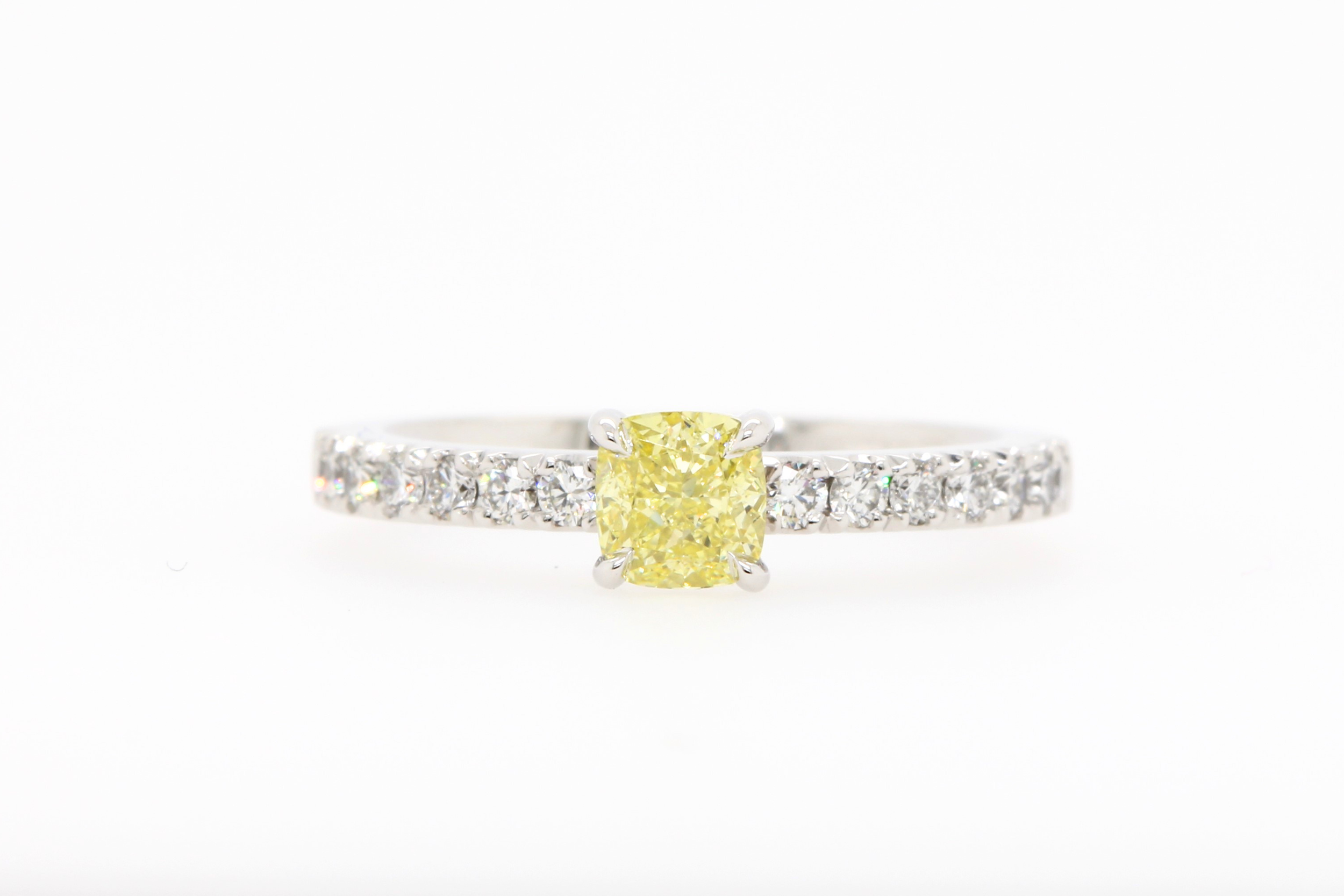
Natural diamonds can be found in all sorts of colours, though, not just white. In fact some of the most valuable diamonds around are in vivid shades of pink, red, and blue. Bright yellows are also a popular choice for statement coloured diamond engagement rings.
So if manufacturers can create white lab grown diamonds, can they create coloured lab grown diamonds too?
To answer this, let’s take a step back to how lab grown diamonds emerged.
When did lab grown white diamonds emerge in Australia?
While lab grown diamonds became a growing choice for Australians’ engagement rings in the 2020s, the technology to manufacture diamonds has actually been around a lot longer than that. Manufacturers have been creating diamond material in laboratories for decades, with the earliest lab grown diamonds seen as early as the 1950s.
In these early decades, it was possible to create diamond material, but not of the quality needed for use as gemstones. So the diamonds they made from the 1950s methods were used for industrial applications, like creating machining and cutting tools - which strong diamond material is perfect for.
Gem quality lab grown diamonds followed a few decades later, but it has only been from the 2020s that a ‘breakthrough’ allowed fine quality white lab grown diamonds to be produced in a way that was properly feasible for the jewellery industry. Lab grown diamonds are beautiful in colour just like natural bright white diamonds, with the same physical and optical properties of their natural counterparts.

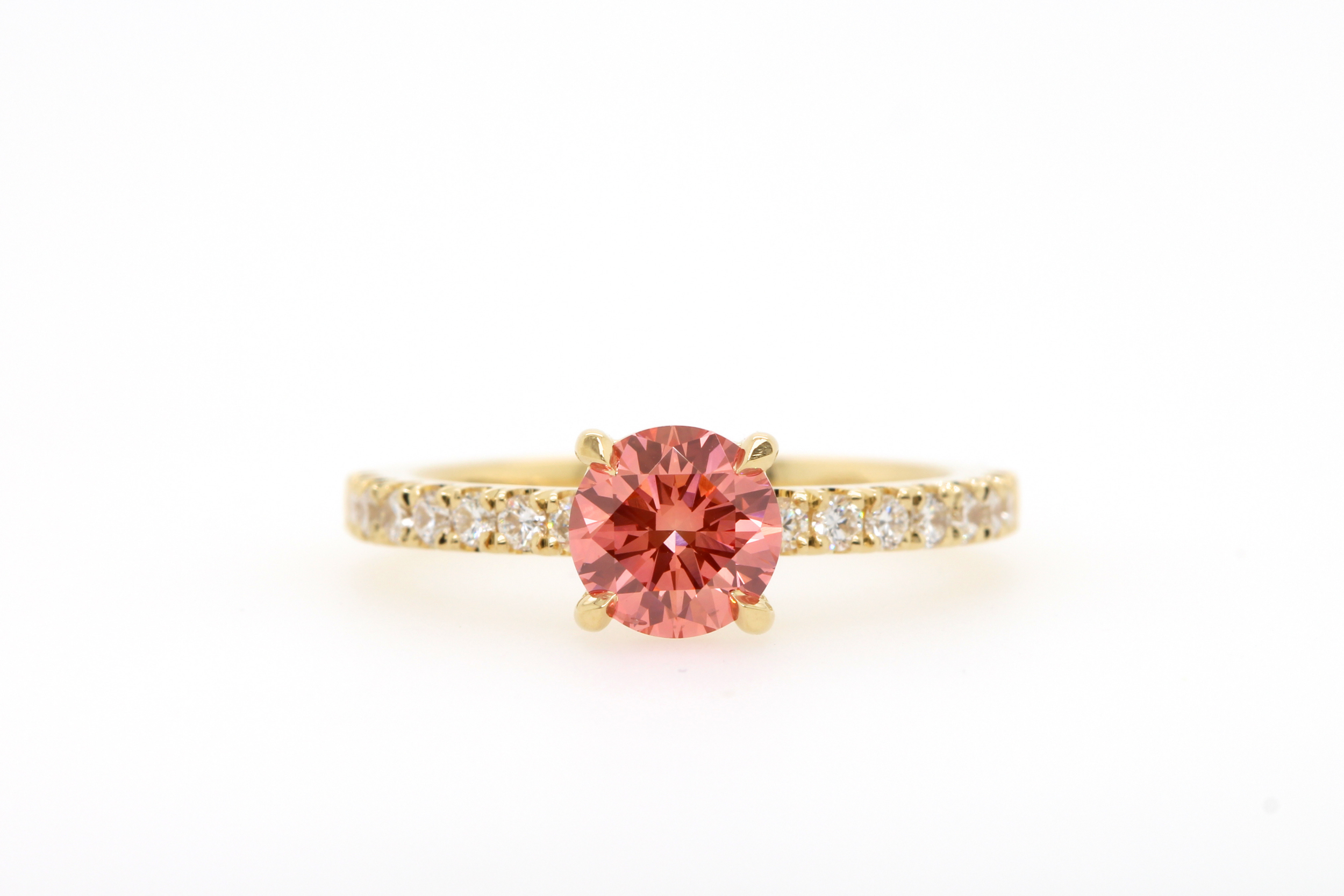
A lab grown radiant cut pink diamond.
When did lab grown coloured diamonds emerge in Australia?
While white lab grown diamonds were becoming mainstream, the technology took a few more years to advance before manufacturers could produce coloured diamonds suitable for jewellery.
In nature, colour in diamonds results from a range of different factors - like changes in the diamond’s atomic structure when it forms (which can create pink and red), to chemical impurities in the material (which can create yellow and blue), to natural irradiation processes in the Earth’s surface (which can create green). These complex processes that produce the uniqueness of gem quality coloured diamonds, took a little while longer to be properly replicated in a laboratory.
Initially, colours were nice but didn’t quite measure up to the ‘essence’ produced by nature. However, colours are improving more and more as years go by, with many laboratory grown diamonds now rivalling the colours and beauty of natural diamonds, especially in diamonds of smaller sizes. As of 2025, both natural coloured diamonds and lab grown coloured diamonds are beautiful choices for an engagement ring.


Looking for advice on selecting an excellent lab grown coloured diamond?
Book an appointment directly with a jewellery designer and maker (not a salesperson) to get personalised advice on lab grown coloured diamonds for a custom made engagement ring.
You may also like:

Should you still surprise your partner with their engagement ring when you've designed it together?
We’re all familiar with the storyline of an engagement ring being bought in secret, and gifted at a surprise proposal moment. Though these days, real engagements happen very differently. What happens when you’re designing your engagement ring together? Should you still surprise your partner with it when it arrives? Here’s my take on this question.
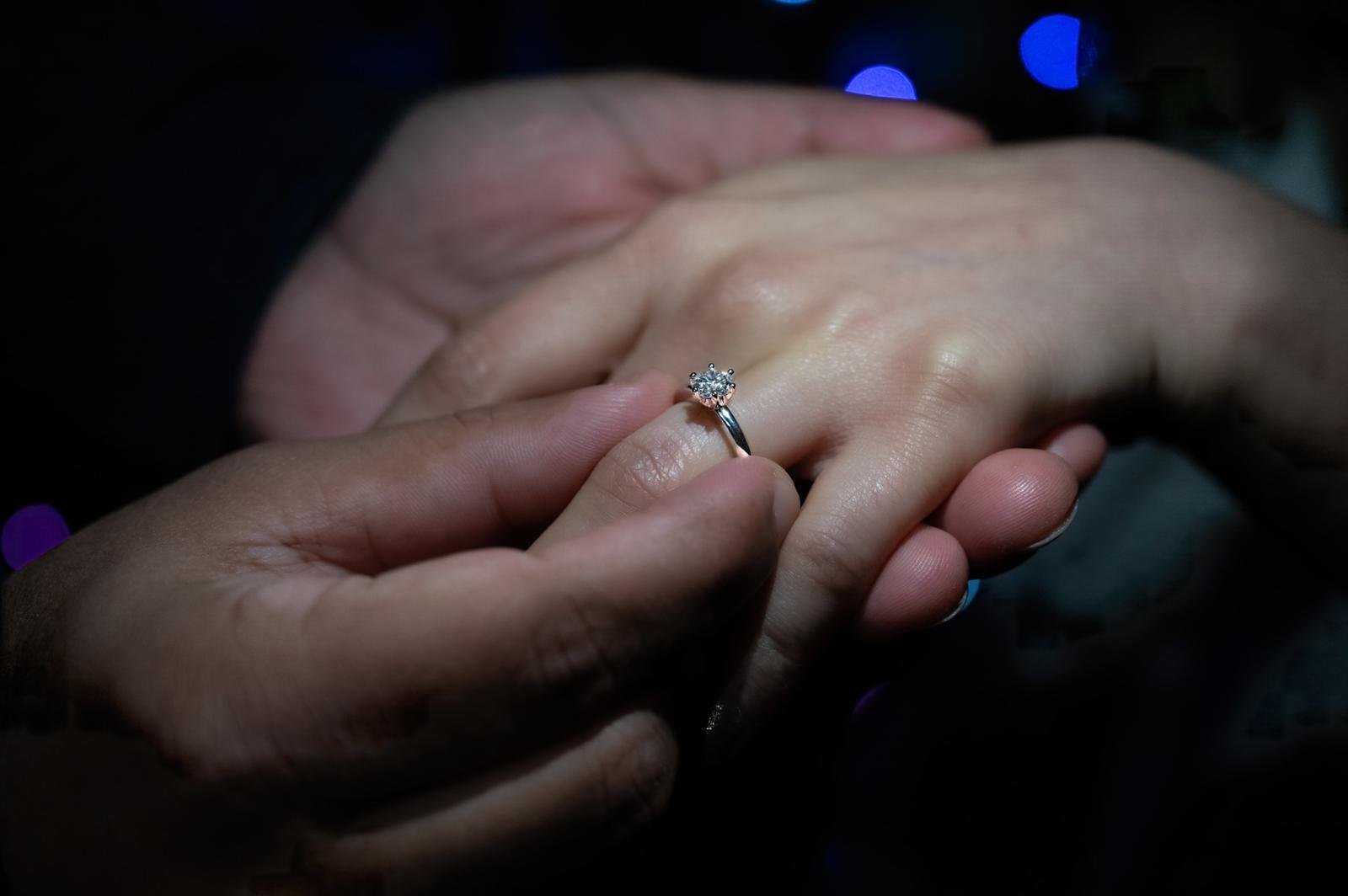
It used to be the case that all engagement rings were bought as a complete surprise, and presented to a completely unsuspecting recipient. These days, relationships are far more varied, and each couple’s journey is very different.
Some couples still have one partner buy a surprise ring.
Some couples design their ring together.
Some couples design a ring each for eachother, with eachother.
Most of the time, marriage - and the engagement ring - has been talked about in some way beforehand.
So, it begs the question: Should you still surprise your partner with their engagement ring when you know it’s coming?
My answer is yes.
Even for couples that have come into my studio and designed their engagement ring (or two) together, I still find ways to make sure they can have their designed-together-ring and their surprise too.
Why?
It’s not to perpetuate the Hallmark moment we’ve been fed for decades. Real life is far more beautiful than any movie-scene fantasy we’ve seen on our screens.
Rather, it’s because the moment you put that ring on your finger, is the moment that begins a new chapter for you and your partner. Even if it’s a chapter you’ve both talked about, and know about, and have in many ways agreed to beforehand, it marks a change.
A change in your story. A change in your lives. A change in the journey you’re on together.
It’s a hugely personal moment. So as your jeweller, I always give you the option of making that moment one you’ll remember in your own truly personal way, rather than in a jewellery studio’s walls. Looking back, you’ll want to remember the day you gave your partner that meaningful ring. So even if you’re designing it together, I encourage you to create your personal moment, and surprise your partner with the ring. I promise you it’ll be a special one, even if your partner knows the ring is coming.
A jeweller that respects that moment, beyond the ring itself, knows how to support you in making that happen in a way that’s perfect for the both of you.
If you’re looking for help to involve your partner in the ring design, but keep the proposal magic, book an appointment with our jewellery maker to get your first conversation started.
You may also like:
9ct vs 18ct gold: Which actually lasts longer?
It’s often said that 9ct gold is ‘harder’, and therefore lasts longer when chosen for an engagement or wedding ring. Here's why it's not that simple.
Choosing between 9ct and 18ct gold for your engagement and wedding rings can be a tough call if you’re unfamiliar with these metals. It’s commonly said that 9ct gold is “harder”, and therefore lasts longer as a piece of jewellery. However the truth is more complex than metal hardness alone.

A Simple Way to Understand the Difference
To unravel this myth, let’s compare it to something we’re more familiar with - the humble dining table. The difference between 9ct and 18ct gold is a lot like the difference between a hardwood table and a laminate dining table.
A hardwood dining table costs more at the furniture store. It shows more surface marks, but these are easy to manage with some care, or even add to the character of the piece. Overall, the hardwood is stronger, sturdier, and more resilient to everyday life. In many years’ time, it’s likely this solid household staple will still be hosting family dinners decades later.
A laminate dining table, by comparison, is far cheaper at the furniture store. It resists surface marks better at first, so doesn’t appear to need as much care early on. Though it damages more obviously and irreparably over time. A laminate table is more brittle in construction, and simply won’t hold up as well to the demands of daily use the way solid hardwood does.
How This Applies To 9ct and 18ct Gold Rings
The difference between 18ct gold and 9ct gold rings is remarkably similar to this example. An 18ct gold ring is much like the hardwood table. A 9ct gold is much like the laminate table.
An 18ct gold ring will set you back a bit more at the beginning, but will far outlast the same ring made in 9ct gold. It’s softer and can seem like it marks more easily, but scratches are easily taken care of with an occasional polish. For an engagement or wedding ring that you plan to wear most days, and keep for many many years, 18ct is the stronger long term choice.
A 9ct gold ring, by comparison, is cheaper than an 18ct ring, but won’t last as long (and in fact, considering its shortened life, often works out to be more expensive per year of wear than 18ct). It resists less surface scratches initially, but its more brittle nature means it doesn’t hold up as well to wear and tear over time. A 9ct gold is unlikely to become a family heirloom.
So Which Should You Choose?
Your choice of gold for own engagement ring or wedding ring is a personal one. It comes down to how often you plan to wear your ring, and how long you keep it, which is different for everyone.
A 9ct gold ring can be a great choice if you’re on a tight budget, don’t plan on wearing your ring much, or intend to upgrade your ring later.
For a ring that you plan to wear most days, want to have in your life for many years, or potentially pass down as an heirloom, 18ct gold is unquestionably the stronger, longer lasting option. Durability isn’t the only difference either. If you’re deciding between the two, it’s worth considering how 9ct and 18ct gold compare in appearance over time too.
Still Not Sure Which Is Best For You?
Need more advice on which precious metal is best for your own engagement and wedding rings? Book an appointment to chat directly with an Australian jewellery maker.
You may also like:

The Biggest Engagement Ring Trends of 2023
As a custom jeweller, whose work is designed entirely with my clients, it fascinates me to see the design trends in our studio each year. Here are the biggest shifts we’ve seen at our Canberra engagement ring making studio in 2023.
As the year draws to a close, it’s that time to pause and reflect on the year of jewellery making that was. Given we’re a jewellery studio that specialises in custom engagement rings, our designs are shaped entirely by what are clients are looking for, not by styles we’ve decided on beforehand. So, it’s interesting to see the ebbs and flows of trends and changes in what people look for in their ring designs.
Here are the biggest shifts we’ve seen in engagement rings going out the door from our Canberra studio in 2023:
1. Traditional Yellow Gold Engagement Rings
Platinum has been the most popular choice of metal for engagement rings for the last couple of years. With pricing basically on par with white gold for the first time in history, clients have been jumping on the chance to bring platinum to their jewellery collections.
Though this year, we’ve seen a huge interest in more traditional yellow gold for engagement ring designs. Almost half of our engagement rings have been handmade in yellow this year, which took me by surprise, but is a wonderful metal to work with. In timeless designs, yellow gold is a classic that will be worn an enjoyed for many years.
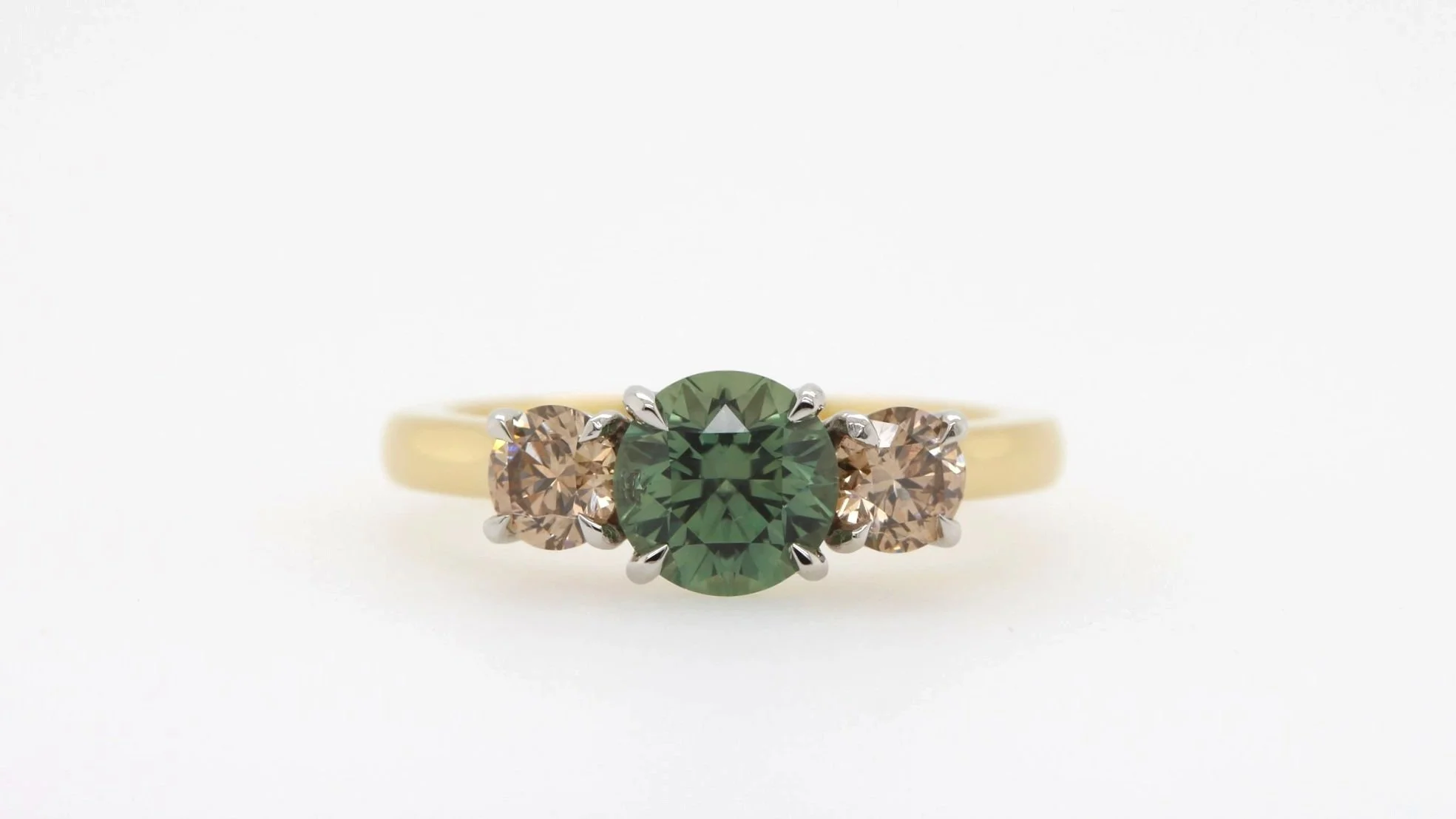
Almost half of our engagement rings in 2023 were handmade in yellow gold; a huge swing from almost-all-platinum designs last year.
2. Quiet Luxury Engagement Ring Styles
One of the biggest trends in fashion this year has been the ‘Quiet Luxury’ movement. People have been shifting away from statement clothing, with prominent brand names, and unique features. The shift has been more toward timeless designs, in understated styles that can be worn and enjoyed for many years to come.
If you’ve been following my work for a while, you’ll know that this has always been the style I veer toward here at Harlequin - ring designs that you can love and enjoy for many years, without the impact of passing trends and fashion tastes. So it’s wonderful to see this ethos bubble up in the fashion world too.
In 2023, we’ve seen a growing interest in classic, understated styles like solitaires using a variety of gemstone shapes, which blends ‘unique’ with ‘classic’. What a joy it is knowing my handmade rings will be loved and worn with pride for many years to come.
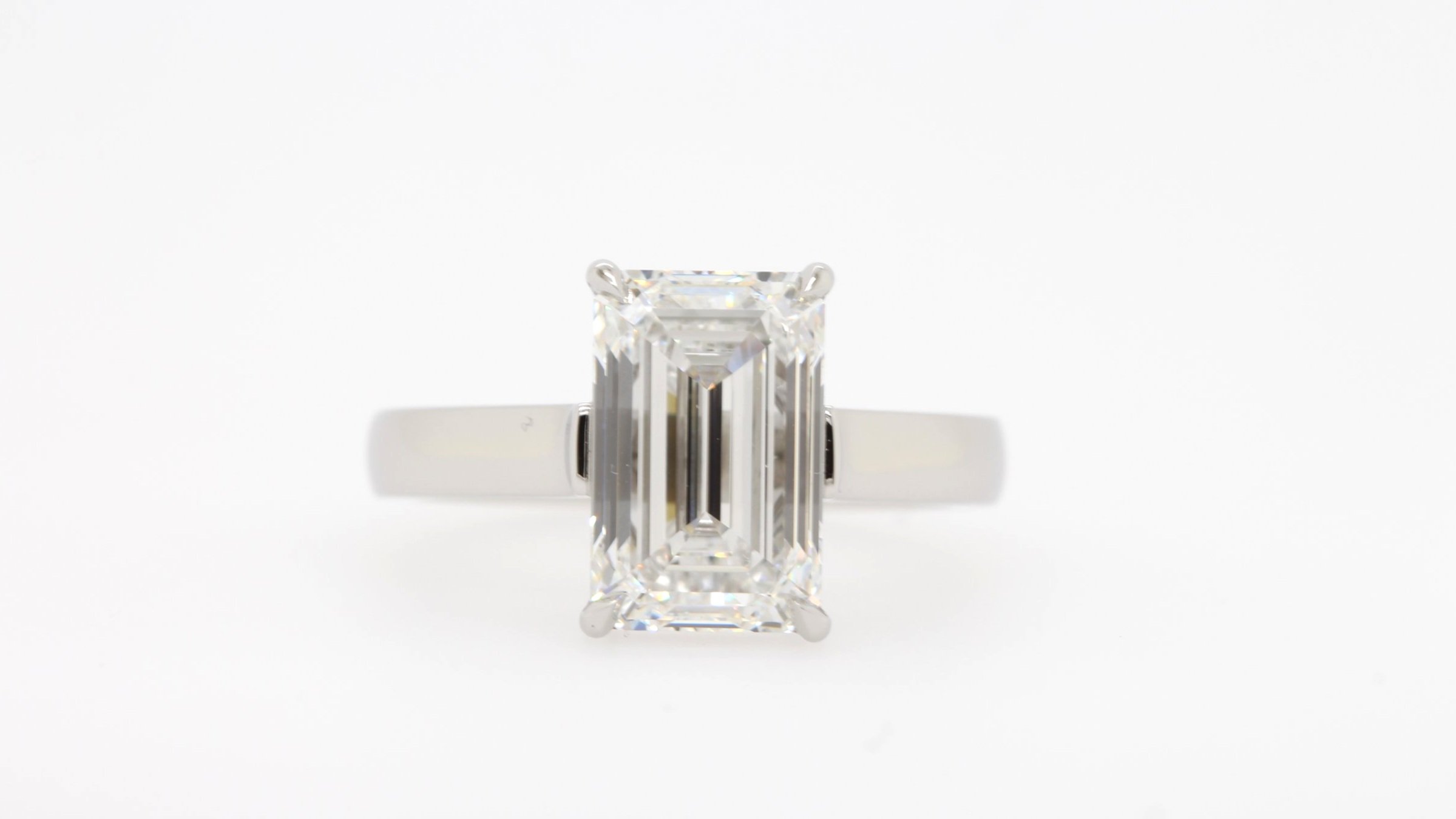
Timeless solitaires with thoughtfully chosen gemstone shapes have been big in 2023, aligned with the ‘Quiet Luxury’ trend in the broader fashion world.
3. Thoughtful Engagement Ring Purchasing
This year, more than ever, the people that have walked through my doors have been more conscious of the choices they make when they buy.
The idea of ‘sustainability’ and ‘conflict-free’ sentiments have been strong for a number of years, but the interest in thoughtful purchasing has gone much deeper than that this year. My clients are far more in tune with where their materials comes from, who makes what they buy, and the process of how it’s all made. Couples are more conscious of who they’re supporting with their purchase-of-a-lifetime. Be that their local makers, talented Australian based faceters, and miners that they can hear about.
As a jeweller, with a passion for old fashioned manufacturing techniques, skilful gem faceting, and unique gemstones, this shift has been wonderful for my work day. My days have been filled with deep chats with my clients about jewellery and gemstones, and it has been a great joy sharing the stories behind the making of all our pieces.

There is a growing interest in who couples are supporting with their purchases, and how things are made, which makes this custom jeweller very happy!
Each year - even each day - at our studio is entirely different. I can’t wait to see what projects and trends 2024 will bring through my doors.
You may also like:

